

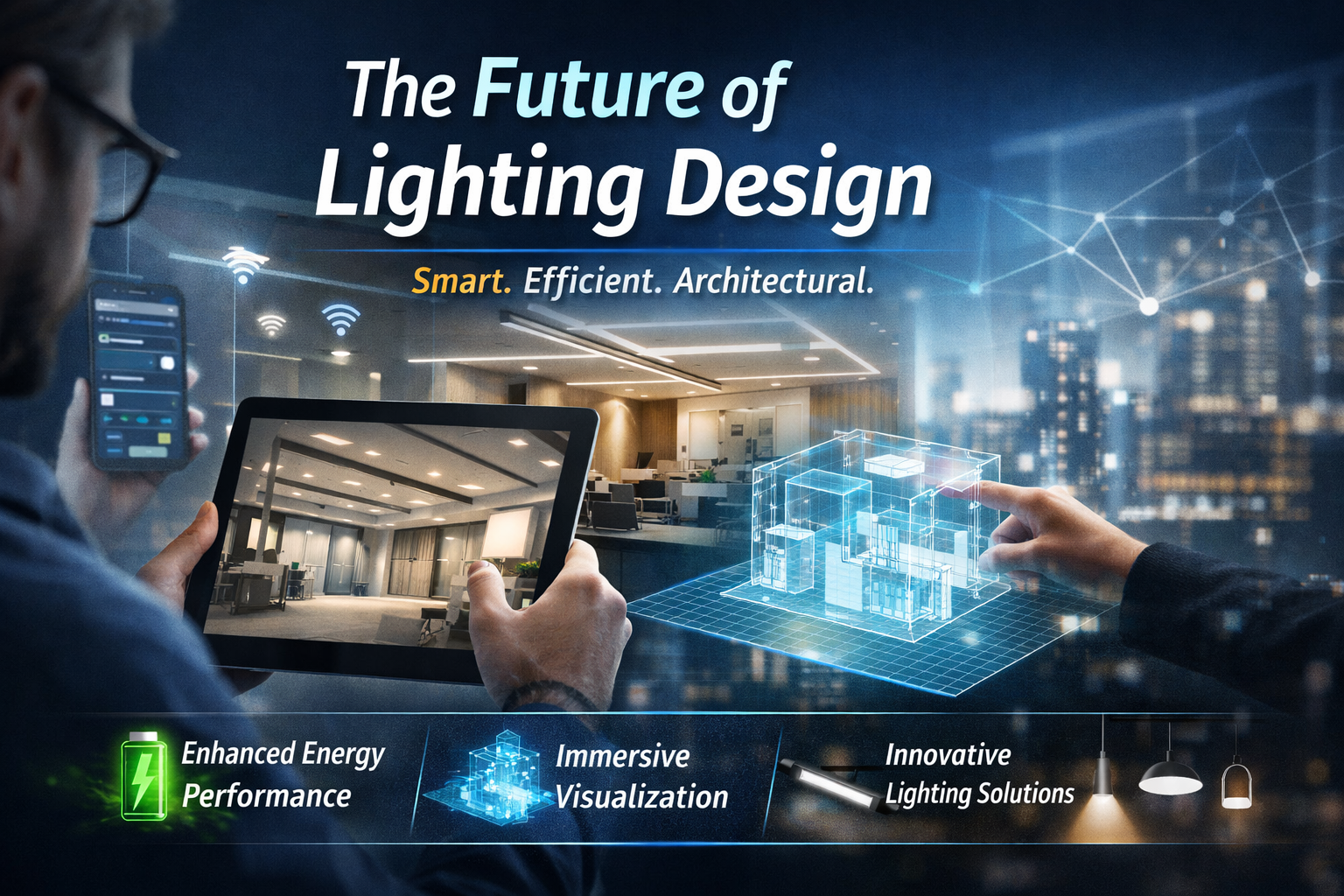
Lighting design is undergoing a rapid transformation. New technologies are changing how designers visualize, specify, and implement lighting solutions—making projects more efficient while unlocking new creative possibilities. Today’s lighting systems are no longer just about illumination; they are integrated tools that improve energy performance, user experience, and architectural aesthetics.

1. Augmented Reality: Visualizing Lighting Before Installation
Augmented reality (AR) is revolutionizing the design process by allowing lighting professionals to visualize fixtures and lighting effects directly within real spaces before installation.
With AR tools, designers can simulate how light interacts with architecture, materials, and spatial layouts. This capability helps eliminate guesswork, improves design accuracy, and reduces costly revisions during construction. The result is faster decision-making and more confident lighting specifications.
2. Smart Lighting Systems and Connected Controls
Smart lighting has become a fundamental part of modern building design. Through connected controls, lighting systems can be adjusted via mobile apps, building automation platforms, or sensors.
These systems allow users to customize brightness, color temperature, and schedules based on occupancy, daylight levels, or specific activities. Beyond convenience, smart lighting significantly improves energy efficiency and operational flexibility in commercial environments.
3. Sustainable and Energy-Efficient Lighting
Sustainability is another major driver of innovation in the lighting industry. Advances in LED technology and intelligent controls allow lighting systems to consume significantly less energy while delivering superior performance.
Energy-efficient lighting not only lowers operating costs but also supports green building initiatives and environmental goals. As sustainability standards continue to evolve, lighting design will play an increasingly important role in creating responsible, future-ready buildings.
4. 3D Printing and Custom Luminaire Design
Manufacturing technologies such as 3D printing are opening new possibilities for luminaire design. Designers and manufacturers can rapidly prototype and produce custom fixtures that were previously difficult or expensive to fabricate.
This flexibility enables highly tailored lighting solutions that align perfectly with architectural concepts, while also reducing material waste and shortening development cycles.
Lighting Design Is Becoming More Architectural

As technology evolves, lighting is becoming increasingly integrated with architecture itself. Designers are moving beyond standalone fixtures toward lighting solutions that complement building forms, materials, and spatial composition.
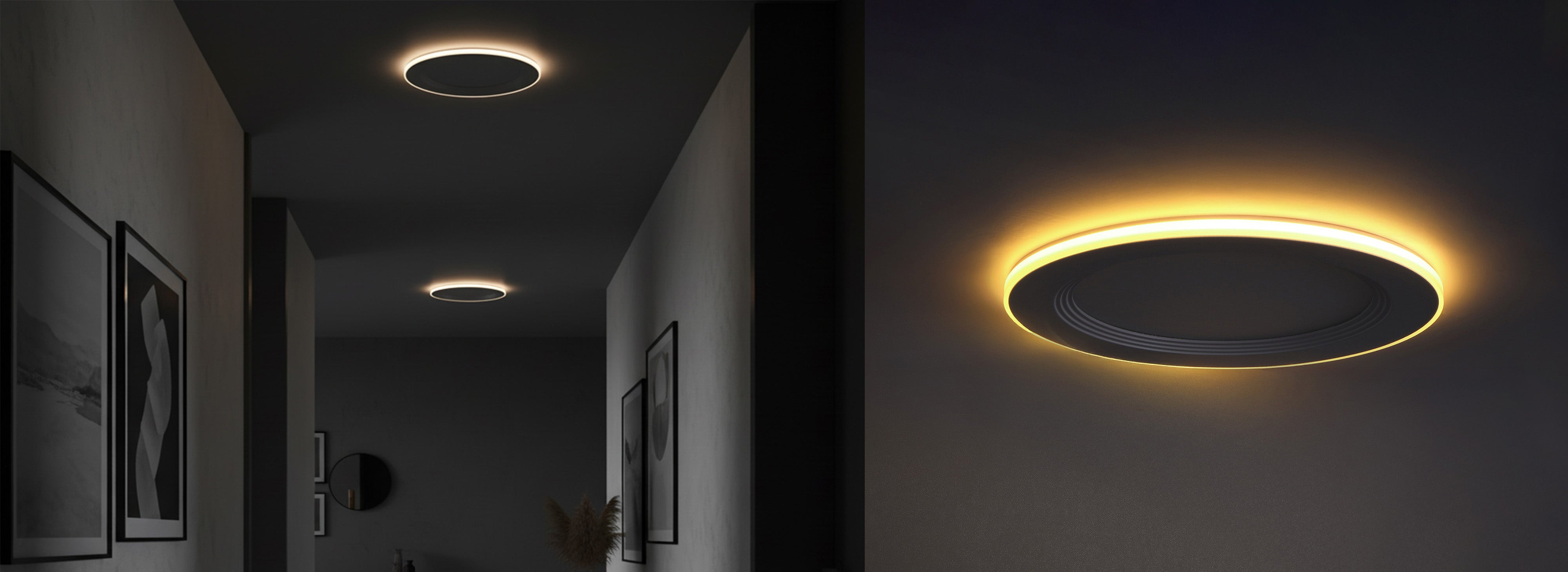
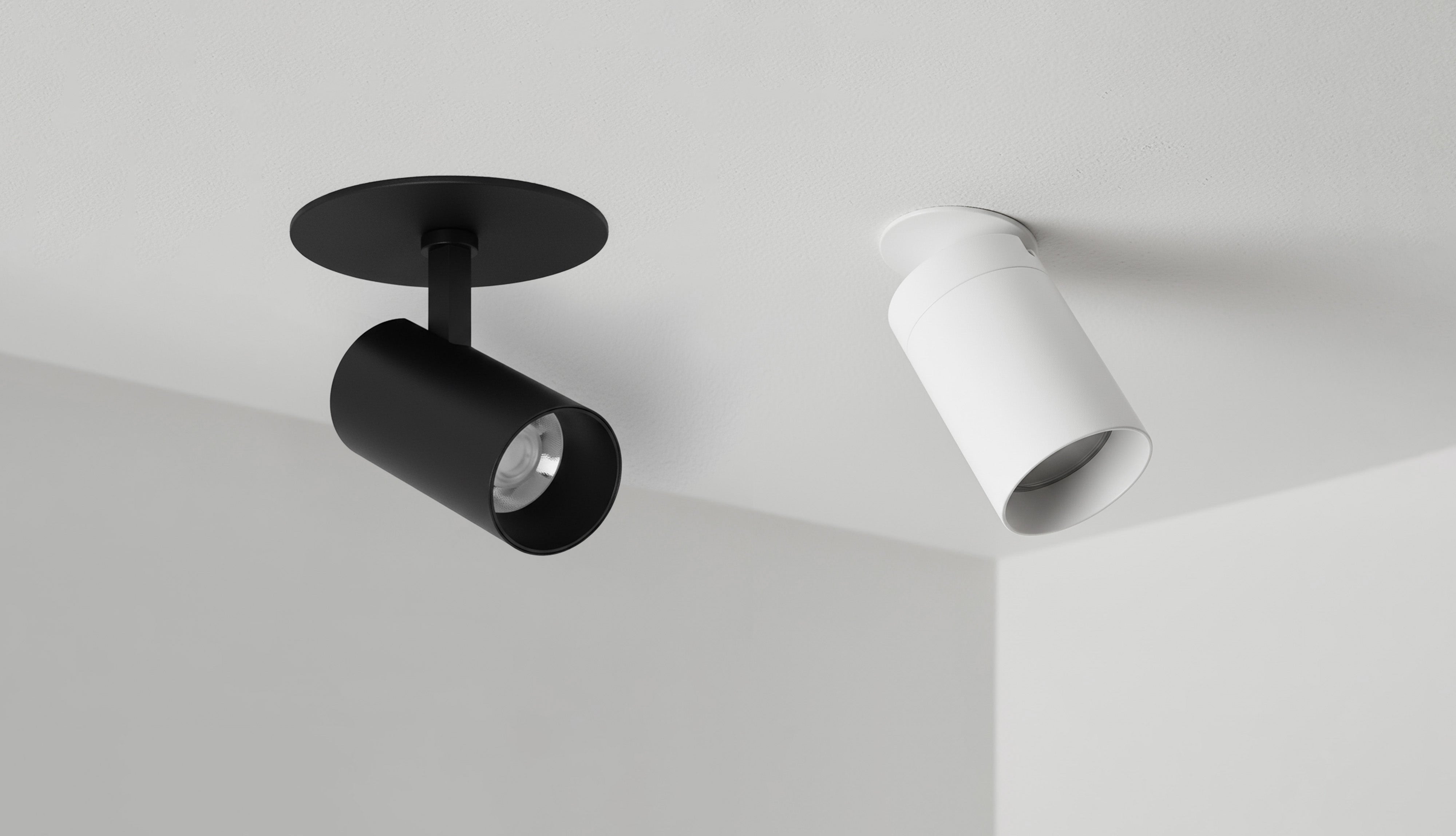
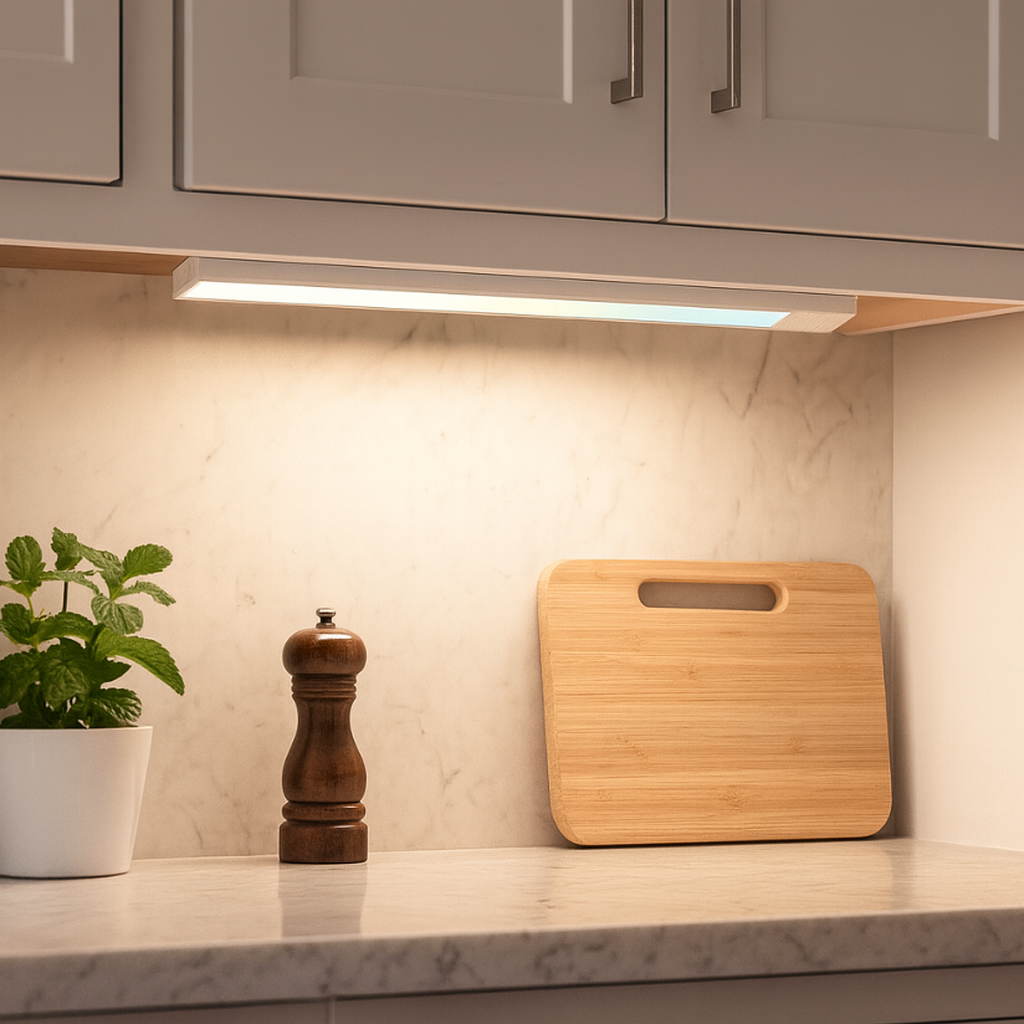
Linear profiles, recessed systems, and modular luminaires allow lighting to blend seamlessly into ceilings, walls, and structural elements—enhancing the architectural narrative while maintaining visual comfort and performance.
Bringing Technology and Architecture Together

At LeonLite Commercial, we believe the future of lighting lies at the intersection of technology and architectural integration.
Our Architecture Series luminaires are designed to support modern architectural lighting concepts, combining clean geometric forms, efficient LED performance, and flexible installation options for commercial environments such as offices, hospitality spaces, and public buildings.
Whether used to highlight structural lines, create layered lighting environments, or deliver high-quality ambient illumination, the Architecture Series helps designers turn innovative concepts into practical lighting solutions.

Share:
Bollard Lights vs Path Lights-Choosing the Right Fixture for Outdoor Pathway Lighting