

A Practical Guide to Safety, Compliance, and What Really Matters
When buying or specifying lighting products in the United States, certifications matter - but they are often misunderstood. Many people assume that certifications define the quality of a light fixture. In reality, most certifications focus on safety, compliance, and minimum performance standards, not design, comfort, or atmosphere.
This guide explains the most common lighting certifications and marks used in the U.S. market, what they actually mean, and how to understand them without letting certification labels limit good lighting choices.
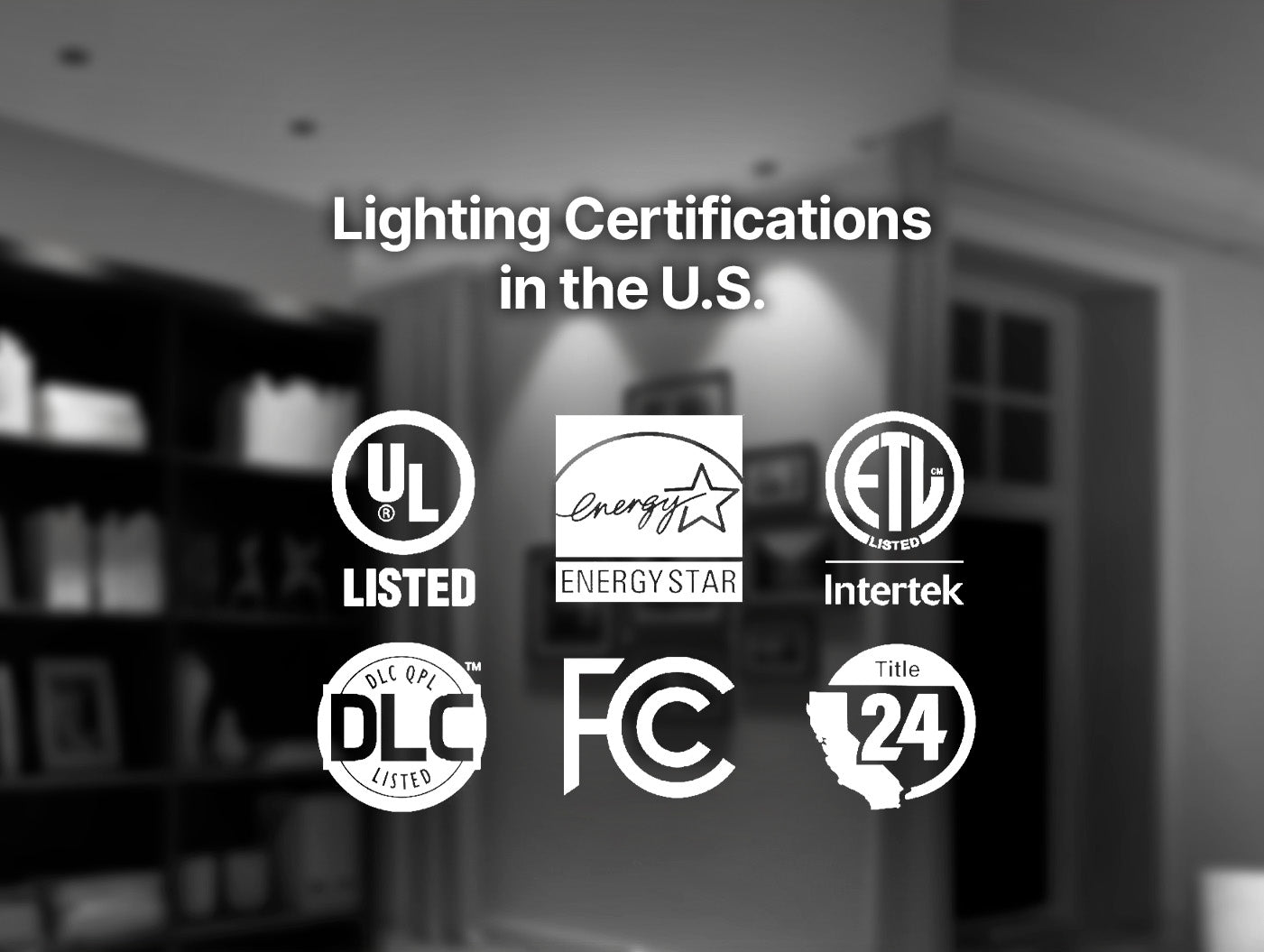
| Certification | Focuses On | Required By | Common Applications |
| UL Listed | Electrical & Fire Safety | Inspectors, Contractors | Residential & Commercial Fixtures |
| ETL Listed | Electrical safety (UL-equivalent) | Inspectors | Residential & Commercial Fixtures |
| DLC | Energy efficiency & Performance | Utilities, Rebates | Commercial & Industrial Lighting |
| Energy Star | Residential Energy Efficiency | Consumers, Retailers | Residential Lighting |
| FCC | Electronic Interference | Federal Regulation | LED drivers, Smart Lighting |
| Title 24 | State Energy & Control Rules | California Only | Residential & Commercial in CA |
UL Listed / UL CertifiedPrimary role: Safety baseline
Most recognized certification in the U.S. |
 |
ETL Listed (Intertek)
Primary role: UL-equivalent safety certification. |
 |
DLC (DesignLights Consortium)Primary role: Commercial lighting efficiency. |
 |
Energy StarPrimary role: Residential energy efficiency. Important Limitation |
 |
FCC CompliancePrimary role: Electronic behavior regulation. Important Limitation |
|
California Title 24Primary role: State-specific energy code. |
|


Safety and Compliance for Worry-Free Installation
Choosing lighting products with certifications such as UL Listed, DLC, and Energy Star means you're not only ensuring safety and compliance, but also receiving the highest standards of assurance. Whether for residential or commercial spaces, these certifications guarantee that our fixtures meet strict safety requirements and have passed multiple performance tests to ensure efficient and reliable operation. With these certifications, you can install with confidence, avoiding any additional compliance concerns and ensuring a smooth project completion.
Energy Efficiency to Help Reduce Operating Costs
Our lighting products are not only fully compliant with all necessary regulations but also carry Energy Star and DLC certifications, helping you significantly reduce energy consumption and operational costs. By using these energy-efficient fixtures, you’ll save on electricity bills while also making a positive contribution to the environment. Whether in residential, office, or commercial settings, our energy-efficient lighting effectively reduces energy waste, bringing long-term financial benefits. Furthermore, these certifications guarantee the high performance and durability of our fixtures, reducing the frequency of replacements and saving on maintenance costs.
Why Our Lights Are Certified (But Not Defined by It)
We believe lighting certifications matter — and that’s exactly why all of our products meet the required U.S. safety and compliance standards.
Certifications such as UL, ETL, Energy Star, or DLC ensure that a light fixture is safe, legal, and suitable for installation. These are non-negotiable fundamentals, and we take them seriously. But we don’t believe certifications alone define what makes lighting good.
Lighting certifications are designed to answer questions like:
• Is this product safe to use?
• Does it meet electrical and energy regulations?
• Can it pass inspection?
They are not designed to answer:
• Does this light feel comfortable at night?
• Does it support the mood of a home?
• Does it enhance materials, colors, and space?
• Does it adapt to how people actually live and work?
We focus on factors certifications don’t measure — such as visual comfort, color consistency, glare control, and how light interacts with real spaces over time. That’s where design, optics, color quality, and real-world application matter.

Share:
Warm Light vs. Cool Light: How to Choose the Right Color Temperature for Every Room
Stop Reading the Full Code: What GC‘s Actually Need to Care About