

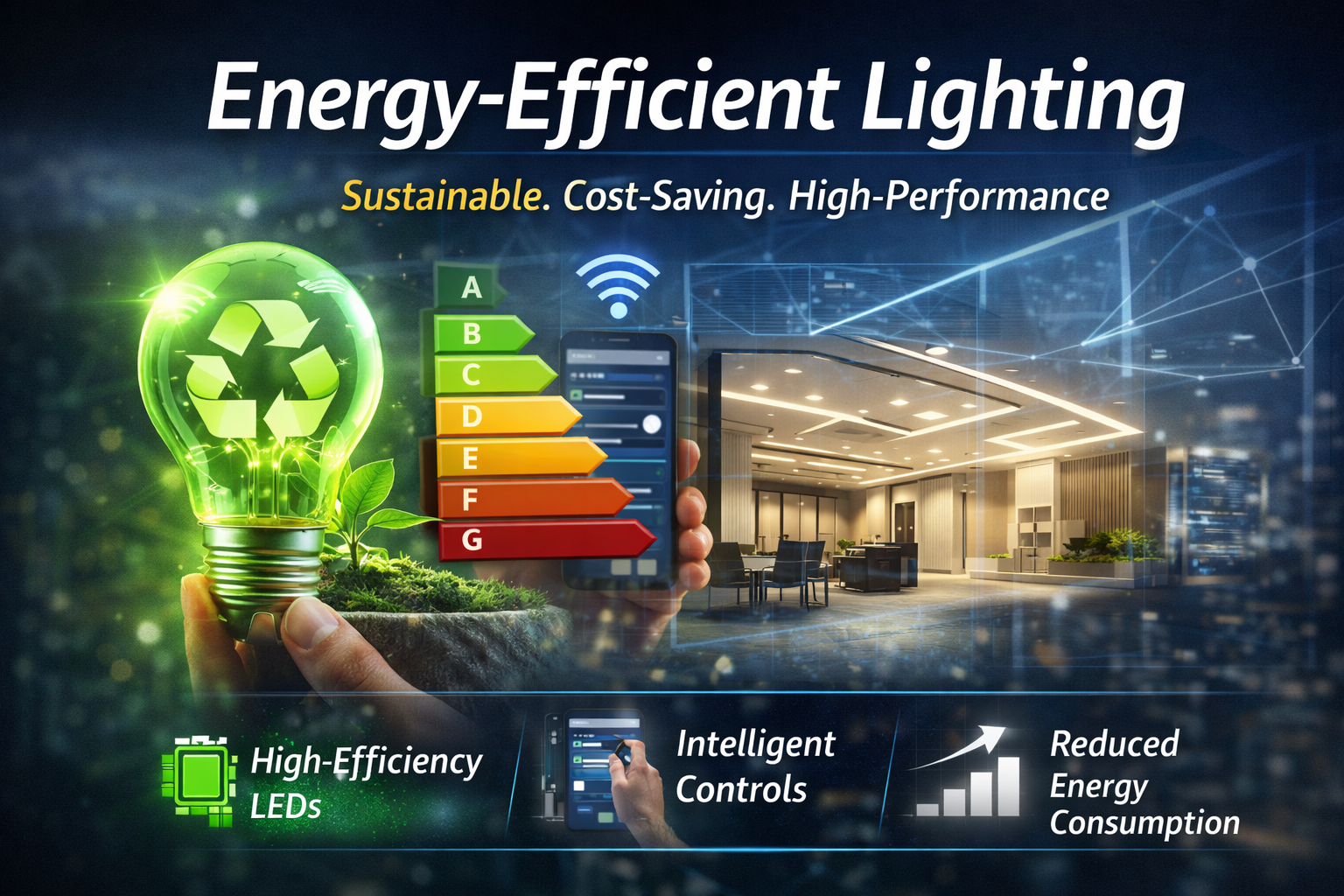
Energy-efficient lighting has become a critical component of modern building design. As energy costs rise and sustainability goals become more important, lighting professionals are increasingly focused on systems that reduce energy consumption while maintaining visual comfort and performance.

Today’s lighting solutions combine high-efficiency LED technology with intelligent control systems, allowing buildings to use energy more responsibly without sacrificing lighting quality. Below are several key principles that define energy-efficient lighting design.
1. High-Efficiency Light Sources
LED technology has become the foundation of energy-efficient lighting systems. Compared with traditional lighting sources, LEDs consume significantly less energy while providing longer lifespans and better lighting performance.
In commercial buildings, switching to LED luminaires can dramatically reduce electricity usage while lowering maintenance costs over time. Efficient fixtures also support compliance with evolving energy regulations and sustainability standards.
2. Intelligent Lighting Controls
Lighting controls play a crucial role in maximizing energy efficiency. Rather than operating at full output continuously, modern lighting systems can automatically adjust based on real-time conditions.
Common strategies include:
-
Occupancy sensors that turn lights off when spaces are empty
-
Vacancy sensors that ensure lights are only activated when needed
-
Daylight harvesting, which dims artificial lighting when natural light is available
These technologies help eliminate unnecessary energy use while maintaining consistent illumination levels for occupants.
3. Integration with Building Systems
Advanced lighting systems can also integrate with broader building management systems (BMS), coordinating with HVAC and other building technologies to optimize overall energy performance.
Networked lighting controls can significantly reduce energy consumption while improving building operation and flexibility. In some cases, integrated control strategies can reduce lighting energy usage by more than 50 percent compared to traditional systems.
4. Energy Audits and System Upgrades
Energy-efficient lighting design also involves evaluating existing systems. Through lighting audits and performance analysis, building owners can determine whether retrofitting existing fixtures or replacing them with new LED luminaires provides the most cost-effective solution.
This approach ensures lighting upgrades deliver both energy savings and improved lighting quality.
Lighting Efficiency Meets Architectural Design

As lighting technology evolves, energy efficiency is no longer the only priority. Designers now seek lighting systems that also enhance architectural aesthetics, spatial experience, and visual comfort.
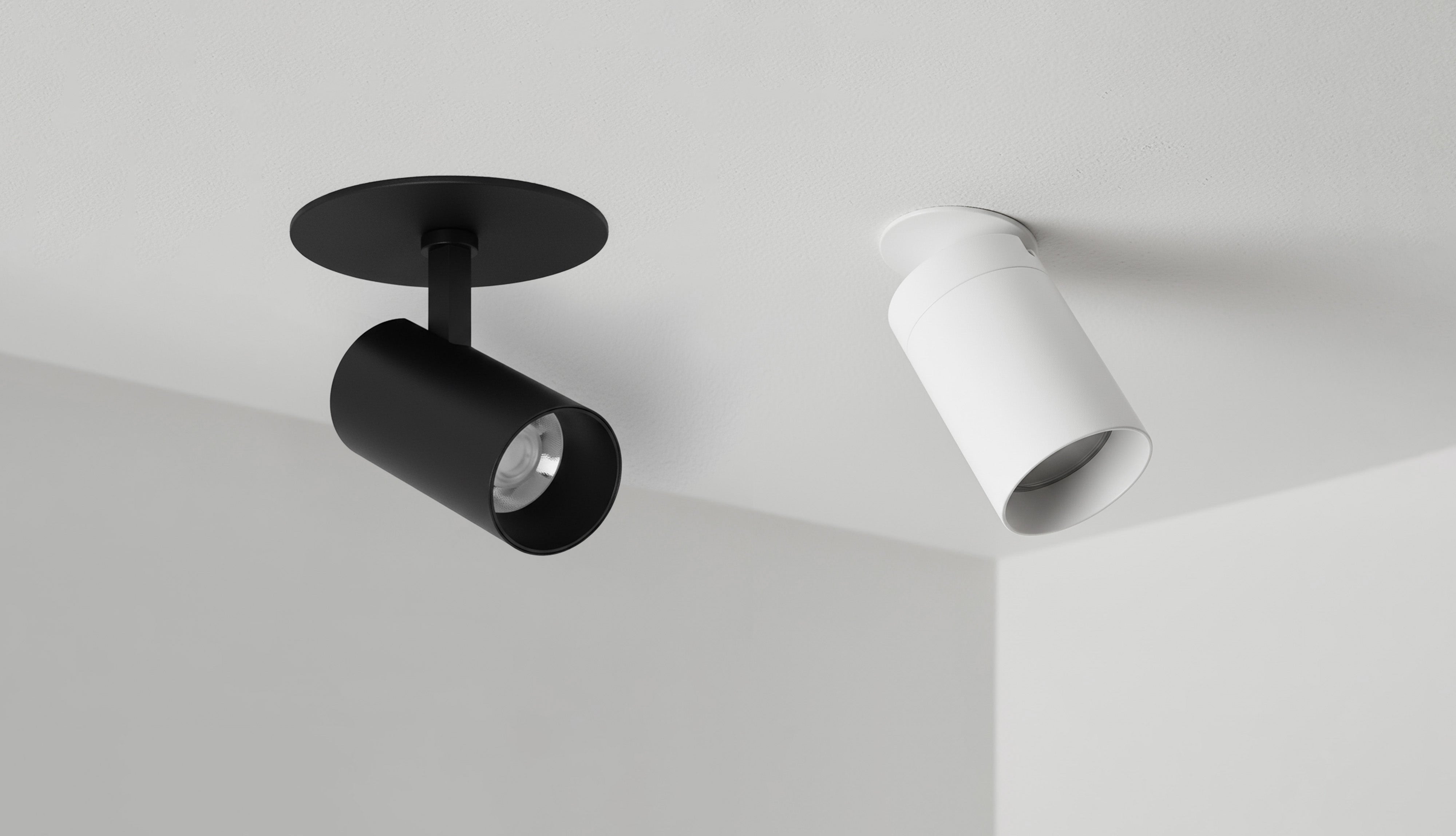
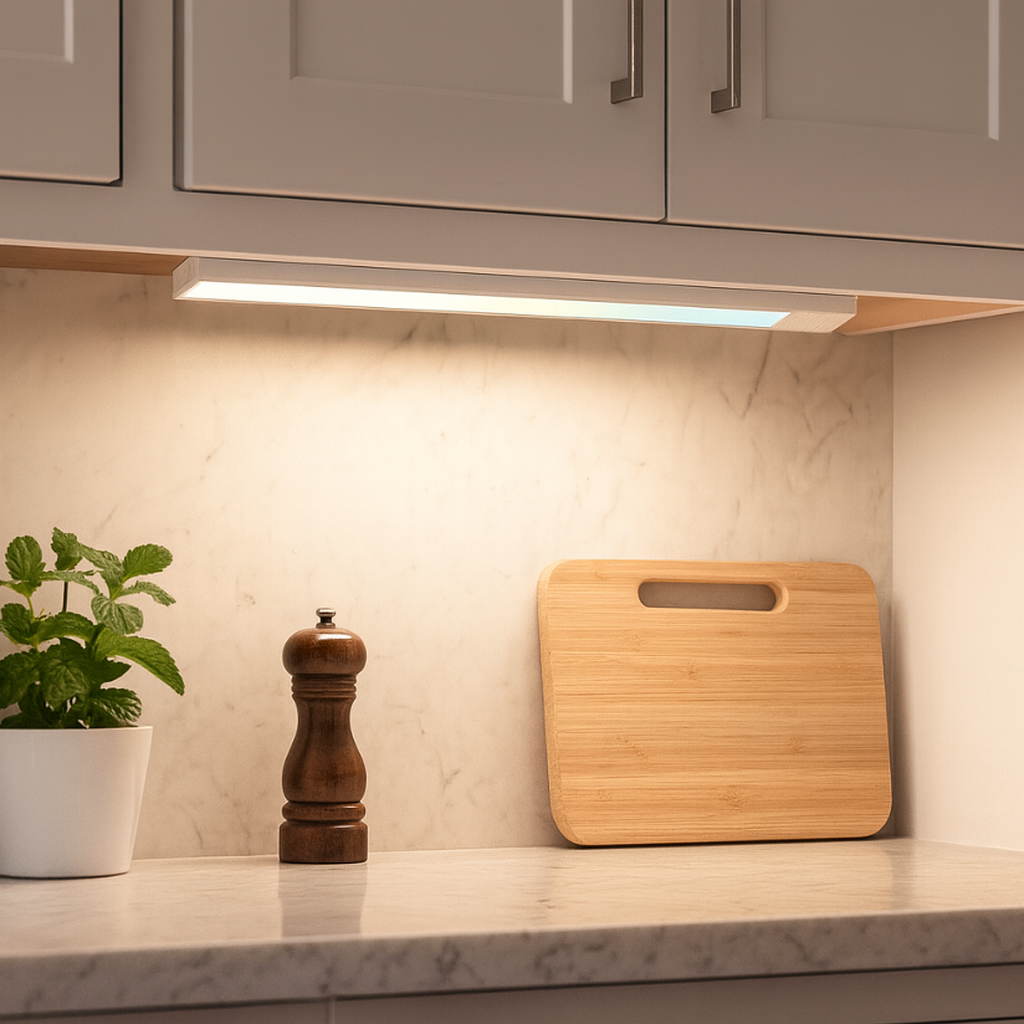
Linear luminaires, recessed systems, and modular lighting solutions allow designers to integrate energy-efficient lighting seamlessly into the built environment—supporting both sustainability goals and architectural design intent.
Designing Efficient and Architectural Lighting

At LeonLite Commercial, we believe energy efficiency should work hand-in-hand with architectural lighting design.
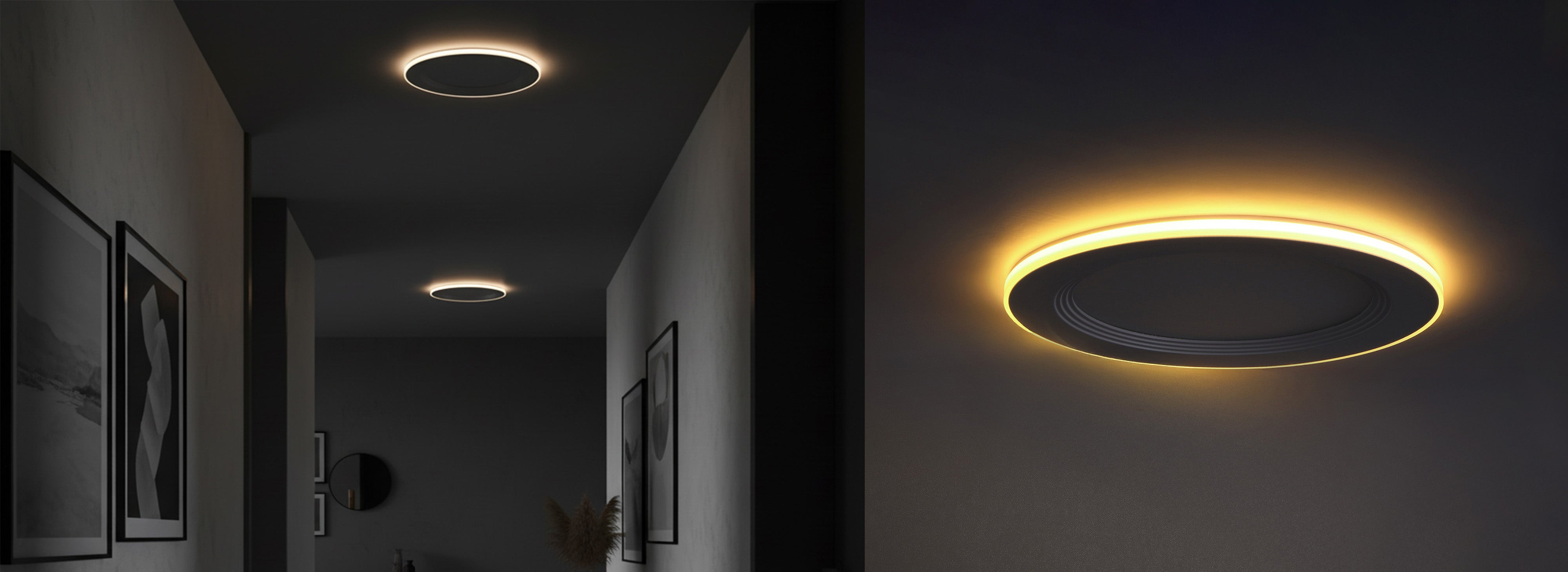
Our Architecture Series luminaires combine high-efficiency LED technology, clean geometric design, and flexible installation options, making them ideal for offices, commercial interiors, and modern architectural environments.
By pairing efficient lighting technology with thoughtful design, the Architecture Series helps create lighting solutions that are both sustainable and visually refined.

Share:
Real-Time Energy Monitoring in Commercial Buildings: What Contractors Should Consider When Choosing Lighting